I've been teaching Grade 4 at Humanitree School in Mexico City for a few years now, and if you'd told me at the start of this school year that my students would be asking me for extra reading time, I'd have laughed. Not because they're bad readers. They're just like every other class of nine and ten year olds I've had. Some love books already. Some see reading time as something to survive until recess.
That changed when we started using Everybody Reads.
Getting them into their own story
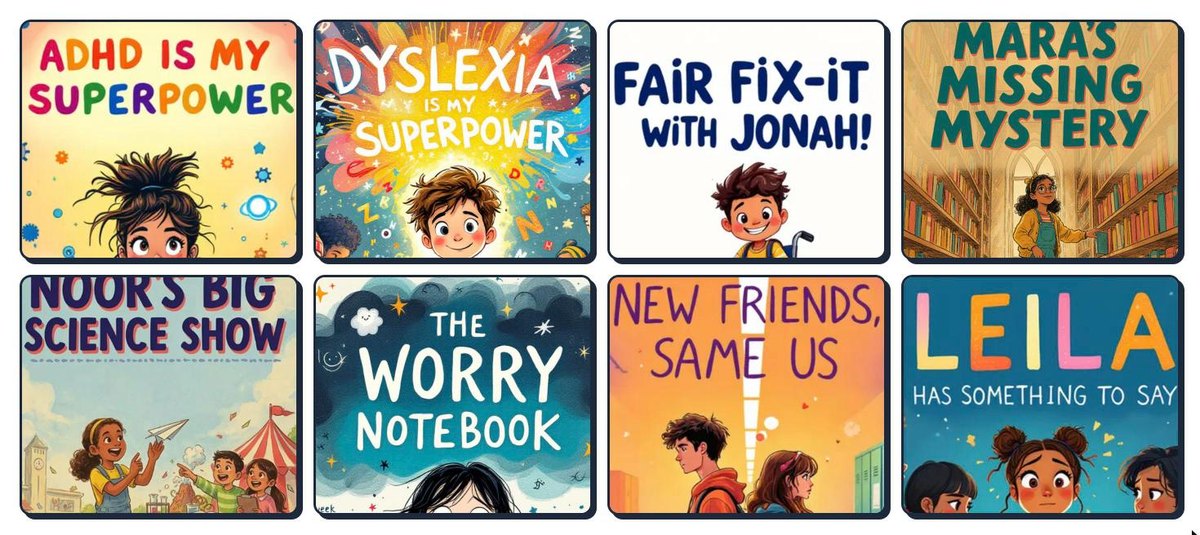
The first thing that hooked my class wasn't the reading itself, it was building their characters. Every student got to design their own avatar and drop themselves right into the story as the main character. I had a boy who is obsessed with football design himself as a striker scoring the winning goal in a World Cup final, and I had a quieter girl in my class, who rarely puts her hand up for anything, build a character who was brave and outspoken in exactly the way she isn't yet in real life.
The part that struck me the most was that my class wasn't just reading about a character, they were reading about themselves. When a child sees themselves represented on the page, actually represented, not just a name swapped in but an avatar that looks like them and a story shaped by what they care about, the whole relationship with reading shifts. Suddenly it's not homework. It's theirs.
Differentiation that happens on its own
Anyone who has taught a mixed ability classroom knows how much time goes into differentiating reading materials. Finding three or four versions of the same text at different reading levels, or trying to source books that hit the right level without being babyish for an older struggling reader, eats up hours you don't really have.
Everybody Reads does that part for me. Every child in my class is reading at their own level automatically, without me having to prepare a single thing extra, and without any child feeling singled out because everyone's book looks and feels the same on the surface. My strongest readers are being pushed with richer vocabulary and more complex text, and my readers who need more support are getting stories pitched exactly where they need to be, all happening quietly in the background of the same lesson.
Finally understanding where each child actually is
Before this, working out a student's actual reading age involved formal assessments a few times a year, and even then I was often going on instinct day to day. Now I can see it laid out clearly for every child in my class, and I can watch it move over the term rather than guessing at parents' evening.
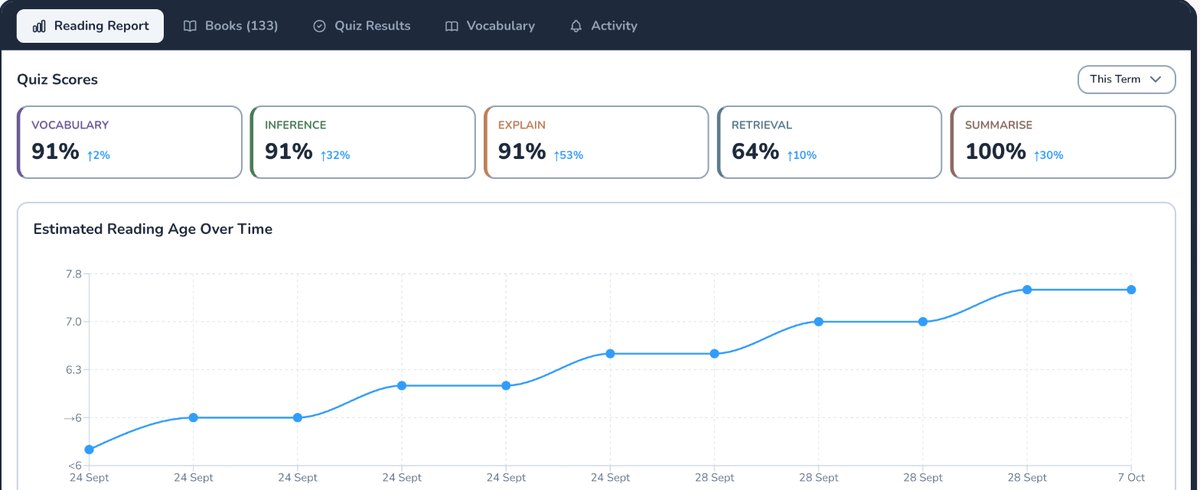
It has made tracking reading progress so much simpler, and it means the conversations I have with parents about their child's reading are backed by something concrete rather than a general sense of "she's doing well."
My favourite part: writing my own books
As much as the kids love it, I have to be honest, my favourite feature is for me. I teach a unit on the Aztecs every year as part of our history topic, and finding age appropriate texts on Aztec civilization that actually match each child's reading level used to mean trawling through websites and adapting things myself late at night.
Now I just create the book myself. I put in what I want them to learn about the Aztecs, and it generates a levelled, personalised text for every single student in my class, all covering the same content but pitched exactly where each of them needs it. I've done the same for our unit on the water cycle, our topic on ancient Egypt, even a book about the school garden project we ran this term. It's turned reading into something that sits inside everything I teach instead of a separate box I have to tick.
If you're a teacher who's tired of choosing between engaging your reluctant readers and stretching your strong ones, or if you're just looking for an easier way to track reading progress across a mixed ability class, I'd recommend giving it a look. My class went from a group of kids with very different relationships to reading, to a room where almost everyone is asking when reading time is next. That's not something I expected to be able to say.
See it in your own classroom
Schools across the UK and internationally are using Everybody Reads to turn reluctant readers into confident ones.
Claim Your Free Pilot